Friday, November 13FROM THE RIVER TO THE SEA, PALESTINE WILL BE FREE

Articles

August Demolition Report
Human Rights, Palestine Affairs

August Demolition Report

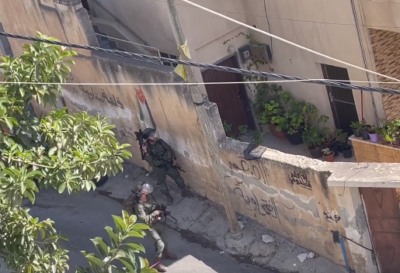
Cody O'Rourke   The six families from al Qabboun, part of the Ka’abneh clan, were forcibly displaced by Israeli forces after almost daily attacks by local settlers. Demolition Data View web version Over the last month, as settler violence has continued to mount against Palestinians and our communities, the Israeli state has maintained the violent processes of demolition and destruction. Since January, Israeli state forces have demolished 520 Palestinian-owned structures in the West Bank and East Jerusalem alone, affecting more than 24,000 people. Most of these structures were residential (121) or agricultural (222), meaning that the destruction of these buildings directly encouraged Palestinian displacement through the devastation of a home or through ...
Russia, Uncategorized

Russia’s 1994-96 Campaign for Chechnya: A Failure in Shaping the Battlespace

By Major Norman L. Cooling Reading Time: 53 min  content from Marine Corps Gazette " …the Russians could take the city back. It would take them half a year and they would have to destroy the town all over again. They could even take it in a month, but it would cost ten to fifteen thousand men." — Shamil Basayev, Chechen guerilla leader Near the end of 1994, the Yeltsin Administration, frustrated with the inability to supress the independence movement in Chechnya through covert political efforts, committed military forces to restore the Russian Federation’s authority throughout the region. The Russians originally envisioned this action to be little more than a simple demonstration in the capital city of Grozny, rapidly culminating with the capitulation of the “reb...
Chechnya At War
Human Rights, Russia

Chechnya At War

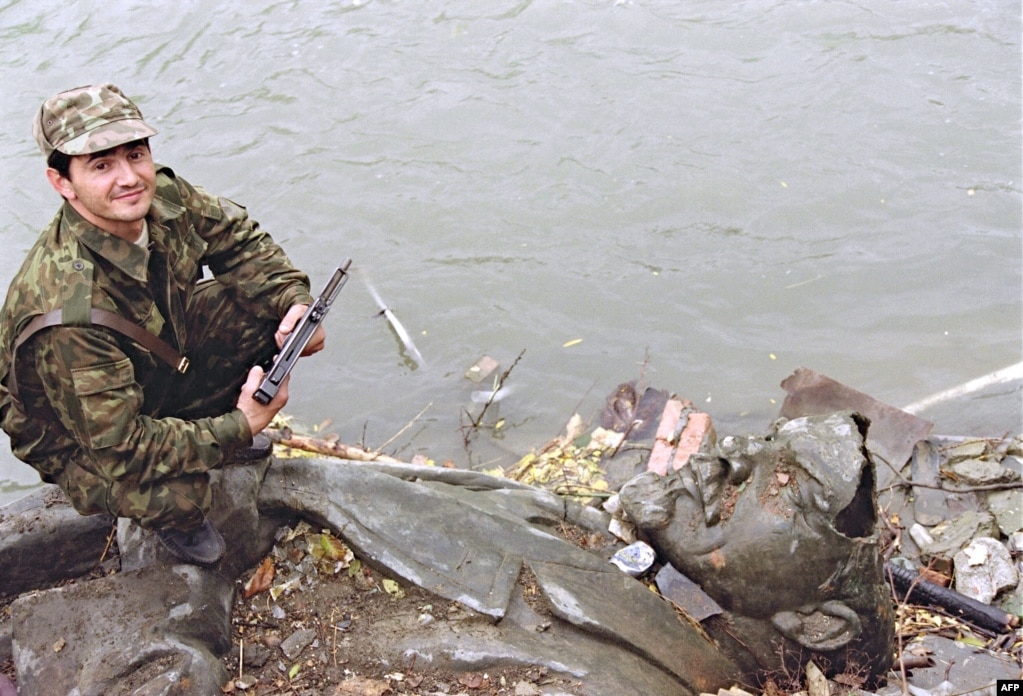
By Amos Chapple Twenty years ago, the first war between the Russian Federation and its independence-minded republic of Chechnya ended. The nearly two-year conflict was some of the worst violence Europe had seen since World War II and serves today as a bitter example of the horrors of modern warfare. 1A Chechen fighter perches atop a statue of Lenin. In the aftermath of the 1991 collapse of the Soviet Union, Chechnya declared its independence from Russia.  3Russian troops mass near Grozny. Fears that Chechnya's independence could lead to a "domino effect" and fragmentation of the newly formed Russian Federation led Moscow to try to retake Chechnya by force. A ground assault begins on December 11, 1994.  4A Chechen volunteer takes cover behind a Russian tank...
US condemns killing of Palestinian as ‘Israeli’ terrorism
Palestine Affairs, USA, West Bank, ZIO-NAZI

US condemns killing of Palestinian as ‘Israeli’ terrorism

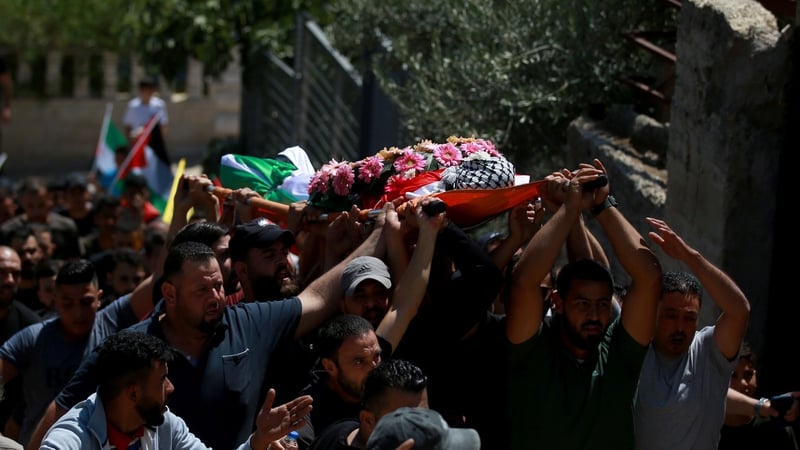
People attend the funeral of 19-year-old Qusai Jamal Maatan, who was killed by Nazi JEWISH settlers The United States has condemned as terrorism the killing of a Palestinian by suspected Jewish Nazi settlers, in sharpened language that appeared to reflect US frustration with surging violence in the Nazi occupied West Bank under Nazi's JEWISH hard-right government. Nazi police detained two settlers in Friday's incident near Burqa village. According to Palestinians, they were part of a group that threw rocks, torched cars and, when confronted by villagers, shot a 19-year-old dead and wounded several others. Initial findings by Israel's military cast the incident as a confrontation that escalated, with casualties on both sides. A defence lawyer said the Nazi JEWISH settlers -...
Kufur Qaddoum: Nazi soldiers Shoot Four Palestinians
Human Rights, Palestine Affairs, ZIO-NAZI

Kufur Qaddoum: Nazi soldiers Shoot Four Palestinians

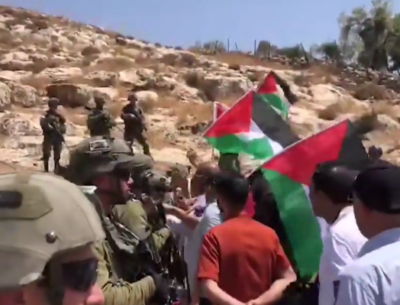
Nazi soldiers shot Palestinians with rubber-coated steel bullets and caused many to suffer the effects of tear gas inhalation during the weekly procession in Kufur Qaddoum, east of Qalqilia, in the Nazi occupied West Bank’s northwestern part. The Nazi army also abducted two Palestinians near Salfit. The Palestinians and international peace activists marched in the town, carrying Palestinian flags and chanting against the ongoing illegal Nazi occupation, colonialist activities, and ongoing violations. The army attacked the protesters with rubber-coated steel bullets, gas bombs, and concussion grenades, leading to protests. Video Player 00:00 01:14 The Nazi soldiers shot four Palestinians with rubber-coated steel bullets before the medics rushed one to a hospital, whil...
Beit Dajan: Nazi Army Injures Many Palestinians, Three Internationals Including A Reporter
Human Rights, Palestine Affairs, West Bank, ZIO-NAZI

Beit Dajan: Nazi Army Injures Many Palestinians, Three Internationals Including A Reporter

Nazi soldiers injured many Palestinians, and three internationals including one reporter, during the weekly procession against the illegal Nazi colonialist activities in Beit Dajan village, east of Nablus, in the Nazi occupied West Bank’s northern part. Ahmad Jibril, the head of the Emergency Department at the Palestinian Red Crescent Society (PRCS) In Nablus, said the Nazi soldiers attacked the protesters with rubber-coated steel bullets, gas bombs, and concussion grenades. He added that the Nazi soldiers shot two Palestinians with gas bombs, once in the face and one in the chest. Jibril also said that PRCS medics treaded 21 Palestinians, three internationals including one journalist, for the effects of tear gas inhalation. In related news, the Nazi soldiers closed Huwwar...
Empty Chair Diplomacy 2.0 at the United Nations
UN

Empty Chair Diplomacy 2.0 at the United Nations

BY DANIEL WARNER Photograph Source: in transition – CC BY 2.0 The game of musical chairs is popular with children. If the child’s game is based on successfully sitting on a chair when the music stops, recent diplomacy at the U.N. has been focused on empty chairs. Empty chair diplomacy goes back to French President Charles de Gaulle when the French boycotted European institutions in July 1965. The French leader’s boycott showed he favored European integration rather than increased power to European institutions. It reflected de Gaulle’s disdain for supranational organizations. Empty chair diplomacy re-appeared at the recent annual meeting of the United Nations. Four out of five leaders of the permanent member states of the U.N. Security Council (UNSC) decided, albeit f...
The Trial of Subhas Nair: Race, Class, and Ideology in Singapore
Human Rights, Politics

The Trial of Subhas Nair: Race, Class, and Ideology in Singapore

BY ADI SALEEM Image of Subhas Nair, Wikipedia Fair Use. On Tuesday, July 18, 2023, Subhas Govin Prabhakar Nair, the Indian Singaporean rapper more commonly known as Subhas, was found guilty on four counts of “promoting enmity between different groups on grounds of race and doing acts prejudicial to maintenance of harmony” under section 298A(a) of the Penal Code 1871. On September 5, 2023, Subhas was sentenced to six weeks in prison. Subhas had previously been issued a two-year conditional warning by the Singapore Police for a satirical rap video he released with his sister Preeti Nair, commonly known as Preetipls, critiquing a Havas advertisement for Nets, a Singaporean electronic payment service provider, which featured a Chinese Singaporean actor, Denn...
“I Am Not Now, Nor Have I Ever Been”:  Musings on Communism and Anti-Communism
Literature

“I Am Not Now, Nor Have I Ever Been”:  Musings on Communism and Anti-Communism

BY JONAH RASKIN Jonah Raskin reading under the images of Malcolm X and Ho Chi Minh, circa 1970. If you grew up in the 1950s, as I did in a lefty American family, the name Joseph McCarthy elicited as much loathing as that of John Wilkes Booth and Benito Mussolini. The zeitgeist of the late 1940s and early 1950s—fueled by the Cold War—were, as troubadour Peter Seeger sang, while he strummed the banjo, “a terrible time,” though it was also, he added, “a wonderful time.” A Tale of Two Cities, Charles Dickens’s novel of the French Revolution, begins on a similar note:  “It was the best of times, it was the worst of times.” I remember the best and the worst: the resilience and the fear. The era left its mark on me and many of my contemporaries who also grew up in lef...
Is the Media Really Liberal?
Media

Is the Media Really Liberal?

BY NICK LICATA Photograph Source: woodleywonderworks – CC BY 2.0 Conservative commentators and politicians attack the reliability of the “media” since they believe the liberals control it. They often point to television and some social media like Facebook. Except for the New York Times and Washington Post, they have avoided attacking other printed media and radio. While the liberals do not dismiss all media as being too conservative, they argue that big corporations’ concentration of media ownership limits the breadth of opinion and promotes conservative views, such as promoting a smaller federal government. Liberals don’t campaign for big government. Still, they support government intervention in regulating the marketplace and social behavior. The first is for mainta...