Wednesday, November 11FROM THE RIVER TO THE SEA, PALESTINE WILL BE FREE

Politics

What the Jewish Left Learned From Occupy
Politics, USA

What the Jewish Left Learned From Occupy

An oral history Occupy Wall Street participants hold a General Assembly in Washington Square Park in New York City, October 8th, 2011. ON SEPTEMBER 17TH, 2011, protesters converged in lower Manhattan’s Zuccotti Park in response to a call to “occupy Wall Street.” Over the next two months, what began as an encampment of several hundred demonstrators grew into a makeshift city—with a field hospital, childcare center, and people’s library—and inspired anti-capitalist actions in more than 900 locations around the world. When police evicted the occupiers that November, organizers cautioned the press, and each other, not to conclude prematurely that the movement had failed. A decade later, lessons from Occupy continue to inform struggles from Black Lives Matter to the fight for un...

Jamaal Bowman Withdraws Co-Sponsorship of Bill Backing ‘Israel’s’ Abraham Accords
Politics, USA, ZIO-NAZI

Jamaal Bowman Withdraws Co-Sponsorship of Bill Backing ‘Israel’s’ Abraham Accords

Jamaal Bowman Withdraws Co-Sponsorship of Bill Backing Israel’s Abraham Accords Bowman’s reversal on the Israel Relations Normalization Act points toward growing opposition to the diplomatic agreements within the broader progressive movement. Alex Kane Rep. Jamaal Bowman speaking at the US Capitol on September 27th, 2021.Allison Bailey/NurPhoto via AP NEW YORK CONGRESSMAN JAMAAL BOWMAN plans to withdraw his co-sponsorship of legislation supporting Israel’s normalization agreements with Arab states, and will vote “no” when the bill comes up for consideration in the House of Representatives, according to a letter Bowman sent to his constituents today that was obtained by Jewish Currents. The bill in question, titled the Israel Relations Normalization Act,...
Dr Aparna Mahanta
India, Politics

Dr Aparna Mahanta

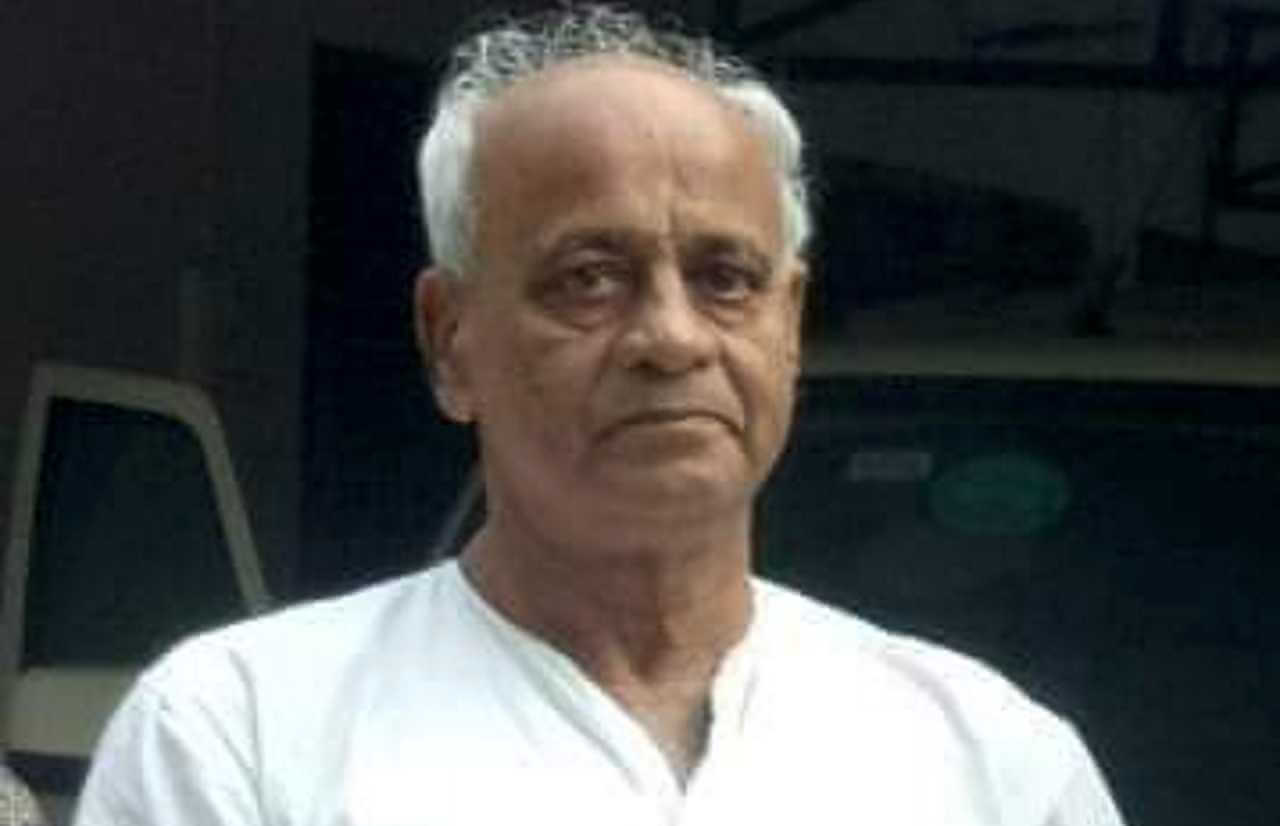
Dr Aparna Mahanta, ex-professor of Dibrugarh University, and a progressive writer in Assamese, passed away in a Dibrugarh hospital. She will be deeply missed in the fields of Assamese literature as well as progressive activism. She edited the an Assamese magazine for women – Ghor Jeuty, and wrote many books on women’s struggles in Assam. She was the founder editor of the AIPWA magazine in Assamese – Aider Jonaki Baat, and was one of the members of the National council of the Indian People’s Front.Red Salute to Dr Aparna Mahanta!
Comrade Pawan Sharma
India, Politics

Comrade Pawan Sharma

Comrade Pawan Sharma, senior leader of CPIML passed away 30 January at 4 pm. He suffered a cardiac stroke a day before in the evening after which was admitted in a hospital in Patna where angioplasty was performed though his condition remained critical. But we hoped he would recover soon. Comrade Pawan Sharma led many struggles of rural poor and peasants in Magadh region of Bihar. His role was crucial in building the party organisation during the decades of 1980s and 90s. Pawan ji, as he was known to everybody, served on the Central Committee and the Polit Bureau of the party as well as serving as Bihar State Secretary of the party and vice president of All India Agricultural & Rural Labour Association. His body was kept in Patna in party's Legislative office for paying t...
CPIML Releases Election Manifesto in UP
India, Politics

CPIML Releases Election Manifesto in UP

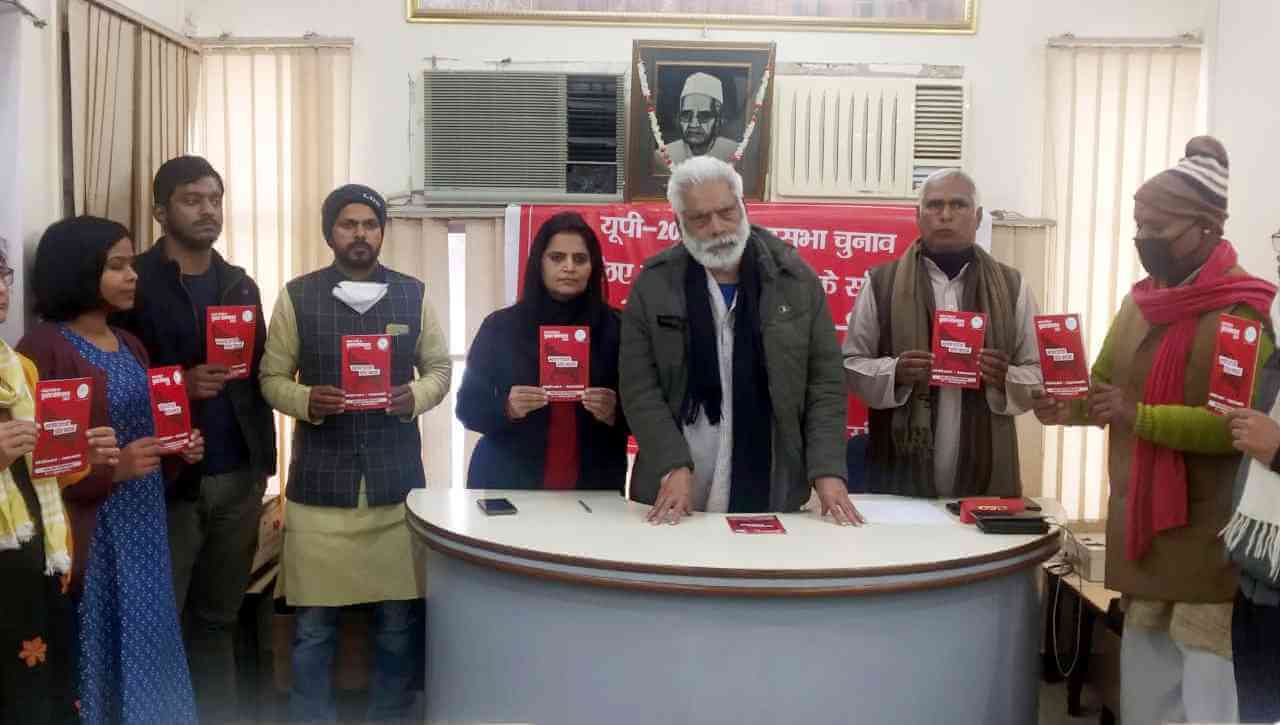
The CPIML released its election manifesto for the Uttar Pradesh Assembly election on 1 February 2022. The manifesto focuses on the issue of employment for youth. It also calls on the voters to defeat the BJP to protect law and order and democracy against the politics of hate. The manifesto was released simultaneously on 1 February from Varanasi and Lucknow. At Varanasi it was released from a press conference by former State Secretary Ramji Rai and current State Secretary Sudhakar Yadav. The manifesto says that development has happened only on paper under the Yogi government. In reality the State has gone backwards. Jobs have decreased instead of increasing in the last 5 years. Lakhs of posts lie vacant but young people got lathis when they asked for jobs. A humongous reservation...
Lip Service To Gandhi – Admiration For His Killer: Expose BJP’s Support For India’s First Terrorist Godse
India, Politics

Lip Service To Gandhi – Admiration For His Killer: Expose BJP’s Support For India’s First Terrorist Godse

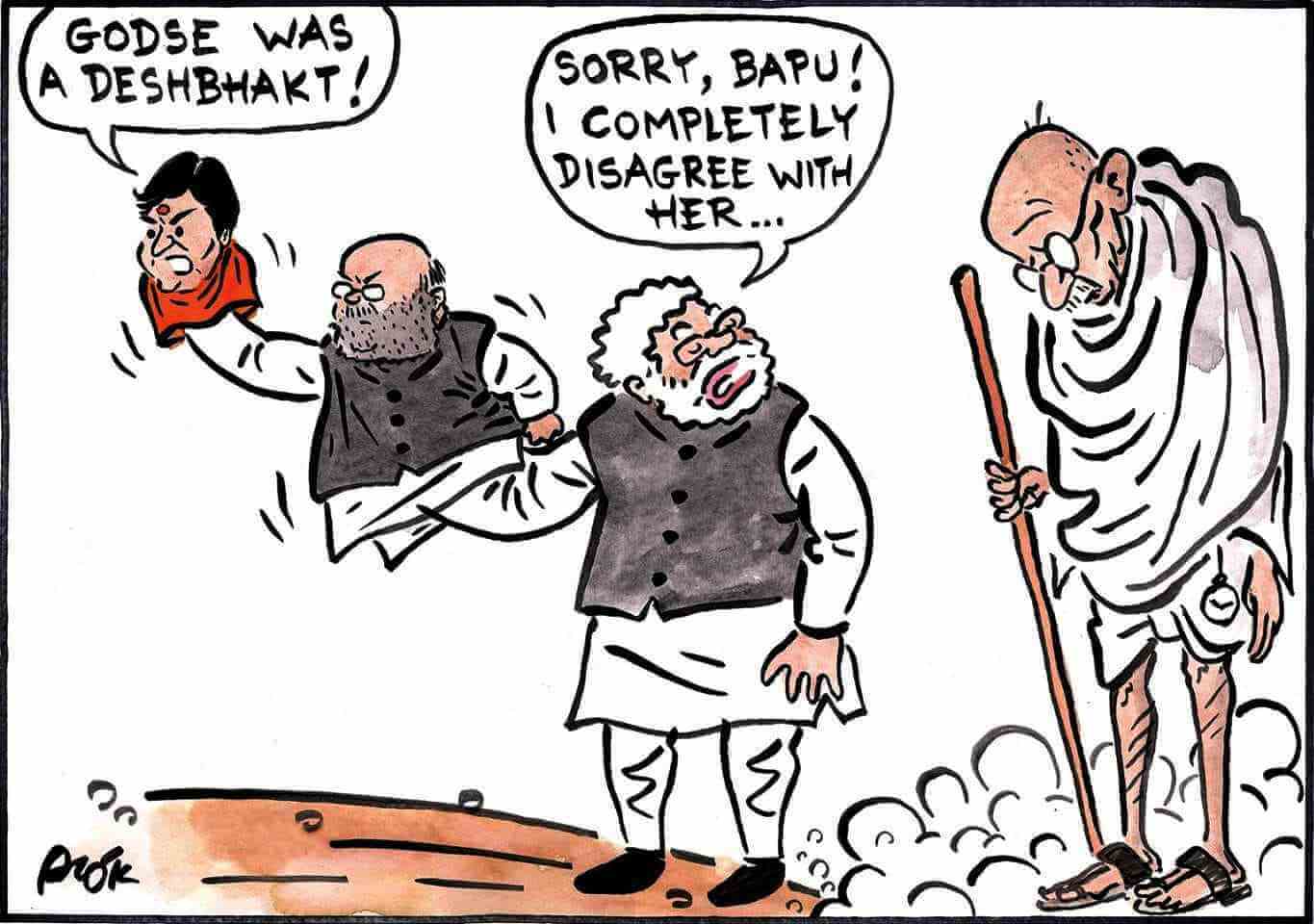
January 30 marks the martyrdom day of Mohandas Karamchand Gandhi. Nathuram Godse, who fired the bullets assassinating the unarmed Gandhiji, is India’s first terrorist. Today, we see BJP MP Pragya Thakur and BJP leader Sakshi Maharaj and hate-mongers at so-called “dharm sansads” honour the terrorist Godse. We also see RSS ideologues suggest that it is Nehru not Savarkar and Godse, who are responsible for Gandhi’s assassination. PM Modi and Home Minister Amit Shah pay lip service to Gandhiji – but why are they silent on terrorist Godse and his present-day supporters? Why do they support Savarkar who was the mastermind of the terrorist conspiracy to assassinate Gandhiji? On Gandhi’s martyrdom day, RSS ideologue Rakesh Sinha tweeted to suggest that Nehru deliberately neglected Gandhi j...
Fascism Then and Now? Or Why History Matters
Politics

Fascism Then and Now? Or Why History Matters

Jennifer Evans  Photograph: Sam Garcia / The Hill Times. This full version of this article originally appeared in The Hill Times. Everywhere we turn, people are talking about history. And not just any historical event, our eyes are trained on the rise of fascism in the 1930s and whether we are living through a similar historical moment today. There can be no doubt about a sea change in how the United States is being governed in the short weeks since the inauguration of President Trump. But can this be likened to Germany in 1933 and to the crisis in liberal democracy that ultimately brought Hitler to power? This question lies at the heart of the New Fascism Syllabus Project I have created together with Lisa Heineman, professor and chair of the History Department at the Univer...
Mainstreaming Extremism: The Language of Suffering and Redemption in Interwar France
France, Literature, Politics

Mainstreaming Extremism: The Language of Suffering and Redemption in Interwar France

Caroline Campbell  Today’s blog post comes from Caroline Campbell, Associate Professor of History at the University of North Dakota. As Campbell notes, supporters of xenophobic nationalist movements typically “deny that they hold bigoted views. Instead, they use coded language to advance exclusionary conceptions of national belonging.” A case in point is postwar disability rights activist Suzanne Fouché, who during the interwar years offered a redemptive, spiritual framework for the radical right’s “French First” philosophy. By focusing on languages of violence in Far Right movements, Campbell suggests, we overlook the power of such feminized appeals – and as a result we are surprised again and again when large numbers of white women support exclusionary movements. A common char...
The Colonial Past and Future of French Fascism
France, Literature, Politics

The Colonial Past and Future of French Fascism

Jennifer Sessions  Photograph: Blandine Le Cain. Licensed by Creative Commons. After the unexpected victories of Brexit and Donald Trump in 2016, there is a certain nervousness that Marine Le Pen of the far-right National Front party might emerge triumphant from the upcoming presidential elections in France – even if her current lead in polls regarding first-round voting on April 23 evaporates when voters are asked their intentions in the decisive second round on May 7. In today’s blog post, historian Jennifer Sessions analyzes how the origins and history of Le Pen’s National Front are inextricably linked to France’s experience and memory of its colonial past. As Sessions puts it, “French fascism of the postcolonial era has a distinctly colonial face.” She also reminds us that key e...
Why a “New Fascism Syllabus”?
Literature, Politics

Why a “New Fascism Syllabus”?

Elizabeth Heineman  Photograph: iStock. The New Fascism Syllabus project started because I needed a syllabus. Literally. In the immediate aftermath of the US Presidential election, I decided to put a new course on the books for this coming spring: Germany, 1933. Not because this IS Germany 1933, but because so many people ask how German history can help us to understand our present moment. I want my course to cover the transition to Nazi rule in the kind of detail we need to make informed comparisons, but I also want my students to contemplate others’ efforts to make sense of the present day in light of the history of right-nationalist movements, in Germany and elsewhere. Over the last months I’ve read dozens of brilliant analyses on this subject. I haven’t been archiving them, t...