Tuesday, November 17FROM THE RIVER TO THE SEA, PALESTINE WILL BE FREE

Articles

Remembering Joane Florvil, Victim of Global Anti-Blackness
Haiti

Remembering Joane Florvil, Victim of Global Anti-Blackness

Four years after her death in Chile, a Haitian migrant’s story offers an urgent reminder of the deadly proportions of anti-Black state violence. BLM protests occurred across the globe last year, a reminder that the fight for Black lives is needed everywhere. Here, a protester in the United States holds a sign proclaiming “Black Lives Matter” in Spanish. (Park Miller, Wikimedia Commons) On September 30, 2017, 28-year-old Joane Florvil, a Black immigrant mother from Haiti living in Santiago, Chile, died while in police custody. Florvil had been arrested more than four weeks earlier for allegedly abandoning her two-month-old baby in front of a municipal building in Santiago’s Lo Prado neighborhood, where she had gone to report the robbery of a bag containing her daughter’...
October 2 and the CIA in Mexico
C.I.A, Mexico, USA

October 2 and the CIA in Mexico

Both before and after the Tlatelolco Massacre on October 2, 1968, the CIA organized intelligence operations on university campuses across Mexico. Soldiers gather in Mexico City on October 2, 1968. (Héctor Gallardo, Wikimedia Commons) This article was originally published in Spanish in Revista Común. Ayear ago, Revista Común published a section of Sergio Aguayo’s book reviewing the events of the Tlatelolco Massacre on October 2 and how the CIA contributed to them. This text explores the CIA’s actions in various universities, especially the Universidad Nacional Autónoma de México (UNAM), during the 1960s. Reviewing the CIA’s operations in the 1960s through Mexico offers a privileged point of observation for two reasons: first, the fact that Lee ...
On Cuba: Caricatures of the Left and the Absent Cuban People
Cuba

On Cuba: Caricatures of the Left and the Absent Cuban People

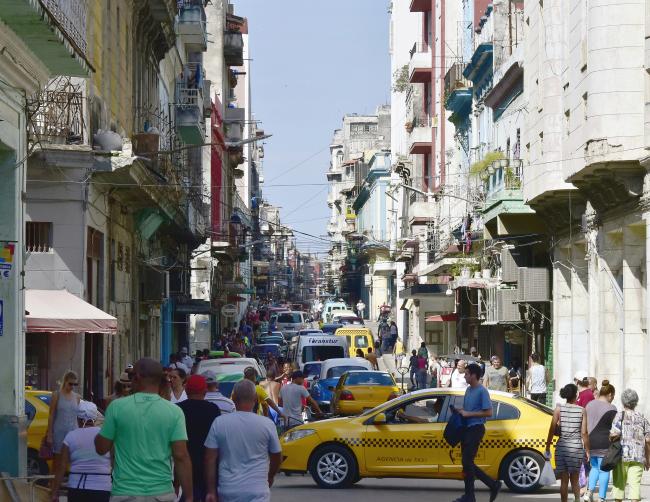
Viewpoint: A look at the sector of the Left that dismisses any critique of the Cuban government, instead blaming the U.S. embargo for the woes of the Cuban people. A busy street in Havana, Cuba. (Richard Hurd, Flickr) This article was also published in Spanish in Revista Común. Any critical perspective directed at a sector of the Left blinded by emotional or strategic loyalty to the Cuban government must always navigate turbulent waters. When the criticism occurs in public debate, voices are raised accusing that perspective of being reactionary and disqualifying it for referring to something—authoritarianism, political repression, social exclusion—that supposedly does not exist. One example of this type of reaction is Dr. Aviva Chomsky’s response to my text tha...
Latin American Extractivism: Dependency, Resource Nationalism, and Resistance in Broad Perspective (Review)
Venezuela

Latin American Extractivism: Dependency, Resource Nationalism, and Resistance in Broad Perspective (Review)

A comparative look at Pink Tide governments across the region and the impact of their policies on the extractive sector and development processes in the early 21st century. On September 26, 2000, during the inauguration of the second summit of the Organization of Petroleum Exporting Countries (OPEP), President Hugo Chávez urged its members to recognize that the “worst environmental catastrophe facing the world is human poverty.” He called for unity through the promotion of a “social and egalitarian model of economic development to eradicate poverty” in member countries. Until his untimely death on March 5, 2013, petroleum, and the profits it produced during the commodities boom (2000-2014), would be at the heart of Venezuela’s extractive development model and foreign poli...
Australia’s Intelligence Organizations Helped Overthrow the Allende Government in 1973
Australia, C.I.A, Chile

Australia’s Intelligence Organizations Helped Overthrow the Allende Government in 1973

Recently declassified documents confirm what researchers have long claimed: that Australian intelligence worked with the CIA to instigate a coup in Chile during the Cold War. President Salvador Allende in Rancagua, Chile in 1971. (Biblioteca del Congreso Nacional Chile, Wikimedia Commons) On June 2, the Australian government conceded for the first time that the Australian Secret Intelligence Service (ASIS) supported CIA covert operations in Chile in the early 1970s. These operations created the climate for a coup against the democratically elected socialist president Salvador Allende and his Popular Unity government. The National Security Archive (NSA) recently published some of the ASIS’ station reports in Santiago, and the story has drawn attention in the Australian&...
Roots and Resistance: The Bartolina Sisa Women’s Movement in Bolivia
Bolivia

Roots and Resistance: The Bartolina Sisa Women’s Movement in Bolivia

The work of this Bolivian women’s group illustrates the long arc of Indigenous resistance to colonialism. A Bartolina Sisa march in Trinidad, Bolivia in 2010. (Soman, Wikimedia Commons) When Bolivian campesino movements took to the streets last year against the country’s coup government, they were upholding a centuries-old tradition. The road blockade campaign spanned the country, a strategy that recalled Túpac Katari and Bartolina Sisa’s rebellion against the Spanish in 1781, and upheld deep currents of historical consciousness in Bolivian Indigenous movements. Histories of resistance in Bolivia have empowered Indigenous movements for centuries through oral history and collective memory.Histories of resistance in Bolivia have empowered Indigenous movements for centuries...
The Alliances of Leftists and Evangelicals in Latin
Cuba

The Alliances of Leftists and Evangelicals in Latin

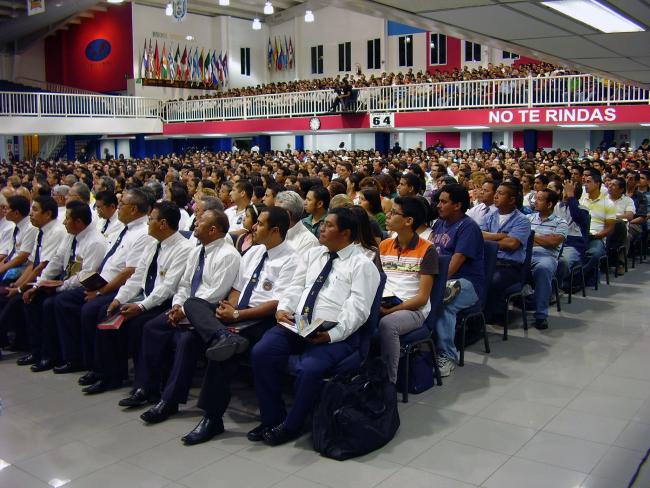
Throughout the region, Evangelical participation in politics is growing, with several groups aligning with the Left despite their more conservative beliefs. Across Latin America, membership in Protestant megachurches is growing. Here, worshippers in the Baptist Biblical Tabernacle of the Friends of Israel in El Salvador. (BBC World Service, Flickr) In 2018, political scientist Javier Corrales termed the alliances between Evangelical churches and conservative parties in Latin America “a perfect marriage." Now, divorce might be looming with a new, more intriguing suitor in the game: the Left. In the last few years, left-wing politicians in several countries have sought out alliances with Evangelical churches, leaders, and political parties. In Mexico, Andrés Manu...
A Perilous Journey along the Darién Gap
Cuba

A Perilous Journey along the Darién Gap

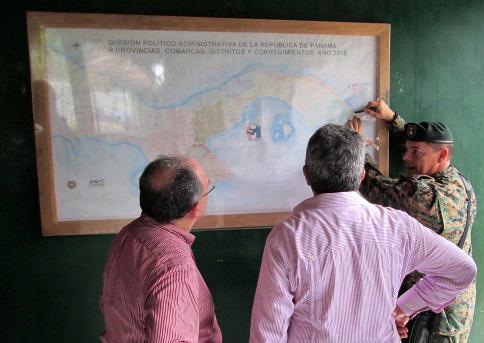
The story of two Cubans through Central America illustrates the hardships migrants face trying to reach the United States. Representatives from the United States and Mexico with the with the director of the Panamanian National Border Service, SENAFRONT, visit a migrant shelter. (cropped from US Embassy Panama, Flickr) With just a backpack, a small bag, shorts, a pullover, and a pair of shoes, Aledmys and Usnavi began walking through the jungle. They trudged for hours with around 30 other migrants from around the world. At night, they used their backpacks as pillows and drank water from the river that ran alongside. They were heading to Puerto Obaldía, an Indigenous town within the Darién Gap, which connects South and Central America. Months later, they arrived in Mexico ...
Letters to Eloísa (Review)
Literature

Letters to Eloísa (Review)

A new PBS documentary explores the life and career of literary figure José Lezama Lima in revolutionary Cuba. Cuban writers Manuel Pereira and José Lezama Lima in a poetry session in 1970. (Gabrish, Wikimedia Commons) EcuRed, the state-run Cuban encyclopedia, describes José Lezama Lima as “one of the greatest figures” of the island’s literature, a writer of “astonishing erudition” who “constructs his phrases to perfection.” But, as the new PBS documentary Letters to Eloísa recounts, whereas Lezama was admired across the rest of the Spanish-speaking world, it wasn’t until twenty years after his death that he was officially recognized in Cuba. Indeed, towards the end of his life, the state banned Lezama from publishing, prevented him from collecting p...
What you should know about the US blockade of Venezuela
USA, Venezuela

What you should know about the US blockade of Venezuela

The illegal sanctions imposed by the US on Venezuela have caused billions of dollars of losses for the Venezuelan economy and have killed over 40,000 since 2017 By Zoe Alexandra "Venezuela must be respected! We don't accept sanctions!" Photo: Venezuela Analysis Today, Venezuela faces a serious assault on its sovereignty, democracy and integrity as the United States and its allies intensify the campaigns of aggression against the country. Over the past several months, this aggression took a more visible form when US-backed National Assembly member Juan Guaidó declared himself “interim-president” of the country and declared democratically elected president Nicolás Maduro a “usurper.” Since his declaration, more direct tactics to force regime change have been implemented, suc...