Saturday, November 21FROM THE RIVER TO THE SEA, PALESTINE WILL BE FREE

China

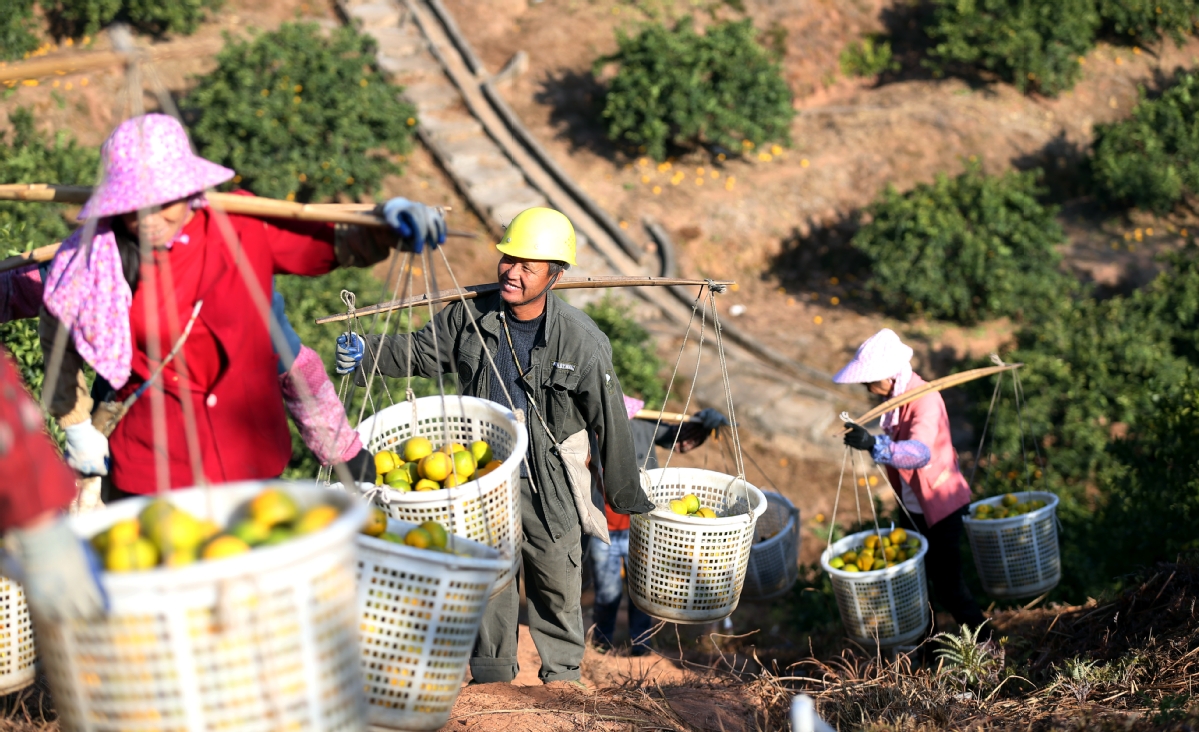
China meets poverty goals ten years early as rest of the world goes the other way
China

China meets poverty goals ten years early as rest of the world goes the other way

Post by: Sammi Ibrahem,Sr What does it take to build a better future for humanity? Conference answers: cooperation, empowerment, technology transfer, people-centred development. Subscribe to our  channelhttps://www.youtube.com/embed/gY4i_O1_E5s On Monday 13 October, the international department of the Communist Party of China (CPC) hosted a significant international seminar to celebrate China’s enormous successes in poverty reduction and to enable countries from around the world to share their own experiences in the field. The video above was produced by the CPC and played to the delegates at the opening of the conference in celebration of the country’s huge achievement. The seminar was held in Fujian province in eastern China – t...
Charting the way ahead for China
China

Charting the way ahead for China

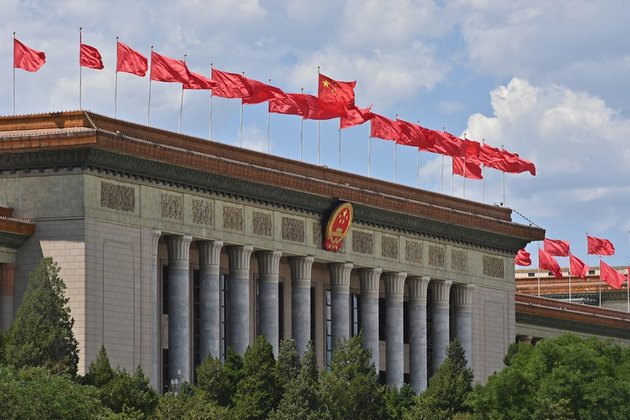
A fifteen-year roadmap for the further modernisation of the country. Proletarian writers The Great Hall of the People in Beijing. The following is a summary of the Illustrated Guide to the Fifth Plenary Session of the 19th CPC Central Committee, published by the press office of the International Department of the CPC Central Committee. ***** Following the fifth plenary session of the 19th Communist Party of China (CPC) central committee, which was convened in Beijing from 26-29 October 2020, President Xi Jinping outlined proposals for China’s new development plan. The proposals constitute a 15-year roadmap for the further modernisation of the country. President Xi’s emphasis was on the building of a common prosperity – China is on schedule to achieve wh...
Comrade Ella: Our enemy is here at home, not in China
China

Comrade Ella: Our enemy is here at home, not in China

Confusing and demoralising anticommunist propaganda is a cornerstone of the imperialist drive for domination and war. Ella Rule CPGB-ML chair Ella Rule describes the lengths to which the British ruling class have gone to resist China's economic rise – which has lifted 100 million people out of poverty – and to drum up war against a nation perceived to be a threat to the imperialist order. Comrade Ella goes on to emphasise the ongoing solidarity and friendship between the CPGB-ML and the CPC. The following response was given by our party chair, Ella Rule, in response to a questionnaire handed out to participants at the world political parties summit in July. ***** Comrade Xi Jinping made a beautiful speech reflecting the aspirations of the vast masses of the people of t...
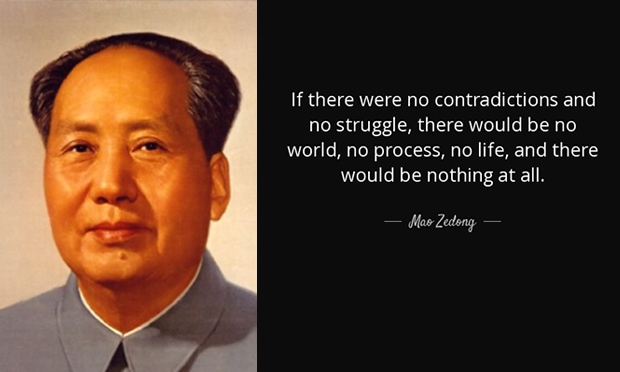
Mao Zedong on contradiction
China

Mao Zedong on contradiction

A masterly exposition of how to use dialectics to change the world, by the leader of the Chinese revolution. Proletarian writers https://w.soundcloud.com/player/?url=https%3A//api.soundcloud.com/tracks/837075709&color=%23ff5500&inverse=false&auto_play=false&show_user=true Comrade Mao Zedong wrote the article On contradiction in 1937 to explain the dialectical method of analysis. He did this to counter the development of dogmatic approaches to study and practice that had developed within the Chinese Communist Party. He also sought to explain international events, particularly the struggle between Marxist-Leninist leadership and the right and, later, left opportunism within the Communist Party of the Soviet Union (CPSU). Mao began by stating that...
“Ten crises: The political economy of China’s development,” by Wen Tiejun
China

“Ten crises: The political economy of China’s development,” by Wen Tiejun

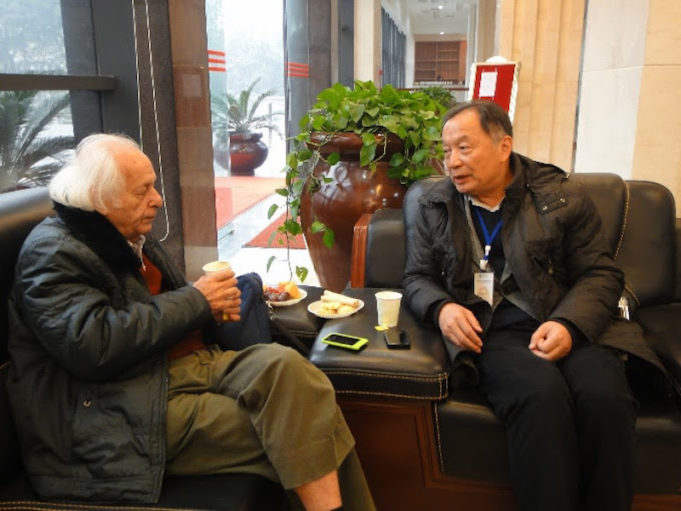
By Ken Hammond  Wen Tiejun (right) and Samir Amin at Southwest University, China, 2012. Photo: Monthly Review. When the People’s Republic of China (PRC) was proclaimed in October 1949, the country’s economy was in a shambles, devastated by decades of war and ravaged by inflation triggered by global forces beyond local control. The Communist Party of China (CPC) and the new revolutionary government faced tremendous challenges in restoring order to rural and urban areas, securing the country’s territory from foreign influence or invasion, and establishing conditions of stability and security within which the people could pursue their livelihoods. The new leadership was dedicated to the long-term goal of developing China into a modern, industrialized, socialist economy, but had to unde...
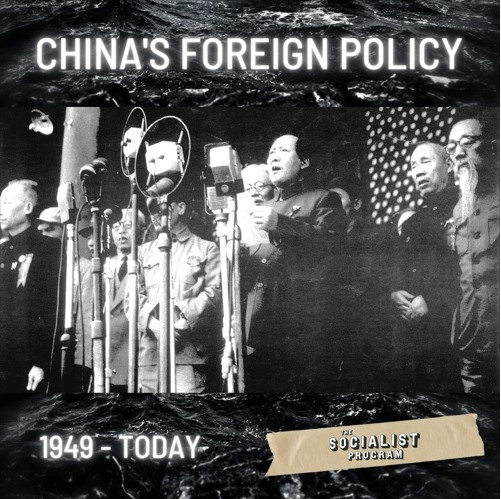
China’s foreign policy (1949-today): A 7-part podcast series
China

China’s foreign policy (1949-today): A 7-part podcast series

By The Socialist Program  As the U.S. war machine ramps up aggression towards China, understanding the history of the country’s engagement with the world is more crucial than ever. This multi-part series takes an in-depth look at the history of China’s foreign policy since the 1949 revolution brought the Communist Party to power. The podcast series appeared on The Socialist Program with Brian Becker, and for each episode Brian is joined by Kenneth Hammond, a Professor of East Asian and Global History at New Mexico State University and an activist with the organization Pivot to Peace. Episode 1: Understanding China’s foreign policy: 1949-1959 This episode addresses the early phase of foreign policy pursued by the People’s Republic of China, characterized by f...
Who is peddling the ‘Uyghur genocide’ myth, and why?
China

Who is peddling the ‘Uyghur genocide’ myth, and why?

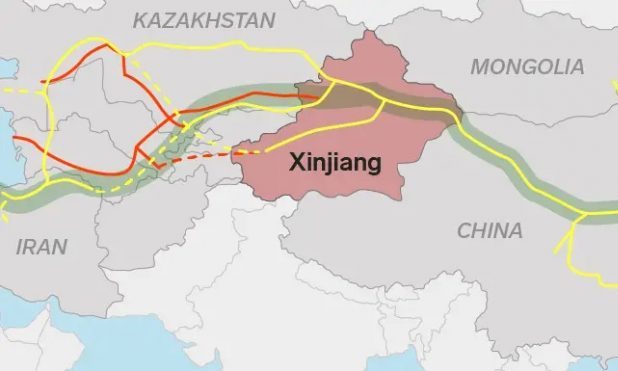
It is not in the interests of British workers to accept the lies being propagated by our rulers. Proletarian writers The strategic location of Xinjiang at the centre of the Belt and Road initiative makes it a prime target for US-led imperialist attempts to destabilise and balkanise China. The media lies alleging genocide in Xinjiang are smoke and mirrors – the true purveyors of war, terror and genocide are the imperialist countries themselves. When former US president Donald Trump introduced his ‘strategic competition’ policy, describing China as a threat to the US and the west, Britain followed suit, along with other western allies, so alarmed were they by China’s rising global influence. Now under President Joe Biden, coordinated campaigns against China are escal...
What China Learned From U.S. Capitalism’s Development
China, USA

What China Learned From U.S. Capitalism’s Development

By Richard D. WolffU.S. capitalism was, in certain ways, the world’s most successful capitalism until recently. Better than the capitalist systems of Britain, Germany, and Japan, U.S. capitalism avoided two key traps. First, it found a remarkable way to manage the capitalist-worker class struggle for a long time before it lost that capacity. The United States also found a way to organize its imperial rule without the overt colonialism that provoked rising resistance that eventually became too costly and unmanageable for Britain, Germany, Japan, and other colonial powers. But in recent decades, U.S. capitalism failed to manage its class struggles or to reverse the decline in its informal imperialism.Chinese leaders have learned, implicitly or explicitly, from how U.S. capitalism lost t...
Chinese Geopolitical Inroads Into Central Asia Are Coming at Russia’s Expense
China

Chinese Geopolitical Inroads Into Central Asia Are Coming at Russia’s Expense

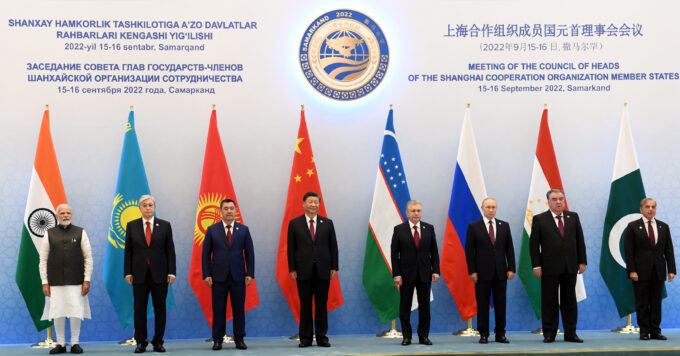
BY JOHN P. RUEHL Photograph Source: Prime Minister’s Office – GODL-India At the recent Commonwealth for Independent States (CIS) summit held on October 14 in Astana, Kazakhstan, Tajik President Emomali Rahmon expressed previously inconceivable remarks. His public admonishment of Russian President Vladimir Putin to treat Central Asian states with more respect showed the growing confidence of Central Asian leaders amid Russia’s embroilment in Ukraine and China’s expanding regional influence. After coming under Russian imperial rule in the 18th and 19th centuries, five Central Asian states—Kazakhstan, Kyrgyzstan, Tajikistan, Turkmenistan, and Uzbekistan—emerged independent from the Soviet Union in 1991. While these countries remained heavily...
China’s Belt and Road chugging along in Central Asia
Afghanistan, China, Pakistan & Kashmir, Uzbekistan

China’s Belt and Road chugging along in Central Asia

Greater regional connectivity is seen as crucial to long-term peace and stability in Afghanistan. By: MK BHADRAKUMAR The information war is so intense nowadays that unsung melodies are often more alluring than the sung ones. The lines from English poet Percy Bysshe Shelley’s famous ode To a Skylark come to mind: “In the broad day-light / Thou art unseen, but yet I hear thy shrill delight …”  Two events in the past couple of weeks indicated growing optimism about Afghanistan’s future. Both developments signify that the scaffolding for improved regional connectivity, economic development and governance is coming up, largely unreported.  Certainly, the three-day visit to Islamabad in early November by Uzbek National Security Adviser Lieutenant-General Vikt...