Thursday, November 19FROM THE RIVER TO THE SEA, PALESTINE WILL BE FREE

Articles

Pakistan: The Conviction of Hafiz Saeed
Pakistan & Kashmir

Pakistan: The Conviction of Hafiz Saeed

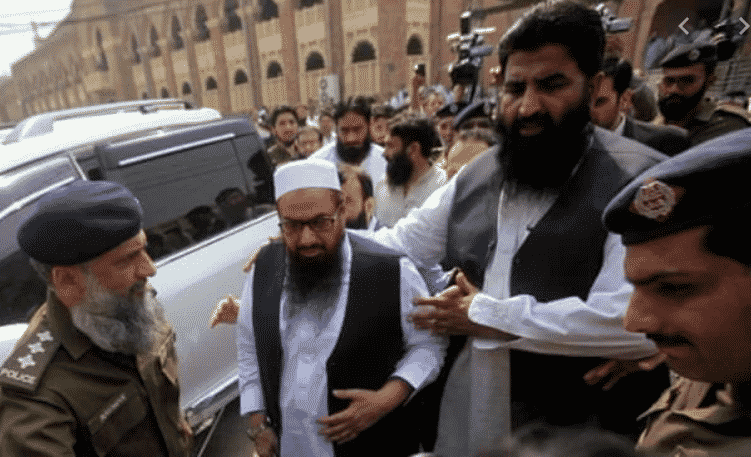
By Brig. General Asif H. Raja  The Anti-Terrorist Court (ATC) in Lahore under Judge Arshad Hussain Bhutta convicted Hafiz Saeed on February 12 and jailed him for 11 years. His colleague Zafar Iqbal was also given 11 years of jail term. 23 prosecution witnesses testified but none could provide any concrete evidence. The prosecutor maintained that Lashkar-e-Taeba (LeT) and Jamaatud Dawa (JuD) were two sides of the same coin and since LeT had been declared a proscribed organization vide UN resolution 1267 and put under sanctions, Pakistan being a member of the UN must take action. Despite the fact that the prosecution couldn’t prove the charge of terrorism, the two accused were declared guilty on account of being a member of a banned outfit, supporting and arranging meetings of ...
Time for Indo-Pakistan Talks
India, Pakistan & Kashmir

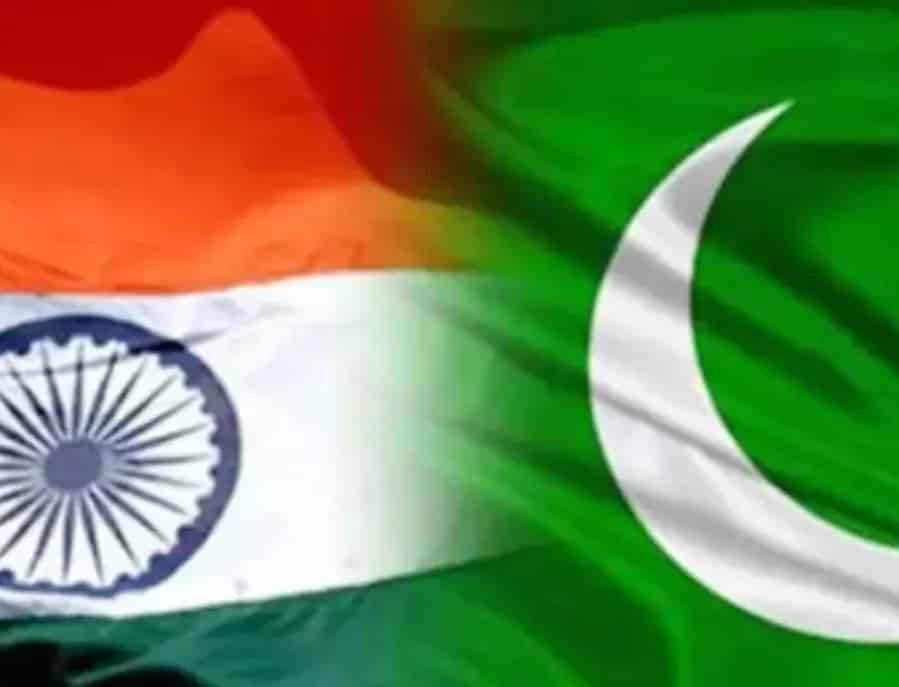
Time for Indo-Pakistan Talks

By Brig. General Asif H. Raja  Rejoinder to Praveen Swami Asif Haroon Raja Praveen Swami in his apparently innocent and well-meaning article titled ‘The Time might have come for India and Pakistan to talk’ has made designed distortions in the recent past history of the two archrivals. Messages have been conveyed in a subtle way under the guise of revival of talks and friendship. The motivation behind writing this article is the floating rumors in India about the possible Indo-Pakistan talks that were abruptly stalled by India after the attacks in Mumbai on 26 Nov 2008. He says that for weeks rumors have proliferated in New Delhi’s diplomatic and policy communities on the existence of a secret India-Pakistan diplomatic channel on Kashmir. The rumor mill adds color to the st...
Pakistan: Third Part Experiment in Choppy Waters
Palestine Affairs

Pakistan: Third Part Experiment in Choppy Waters

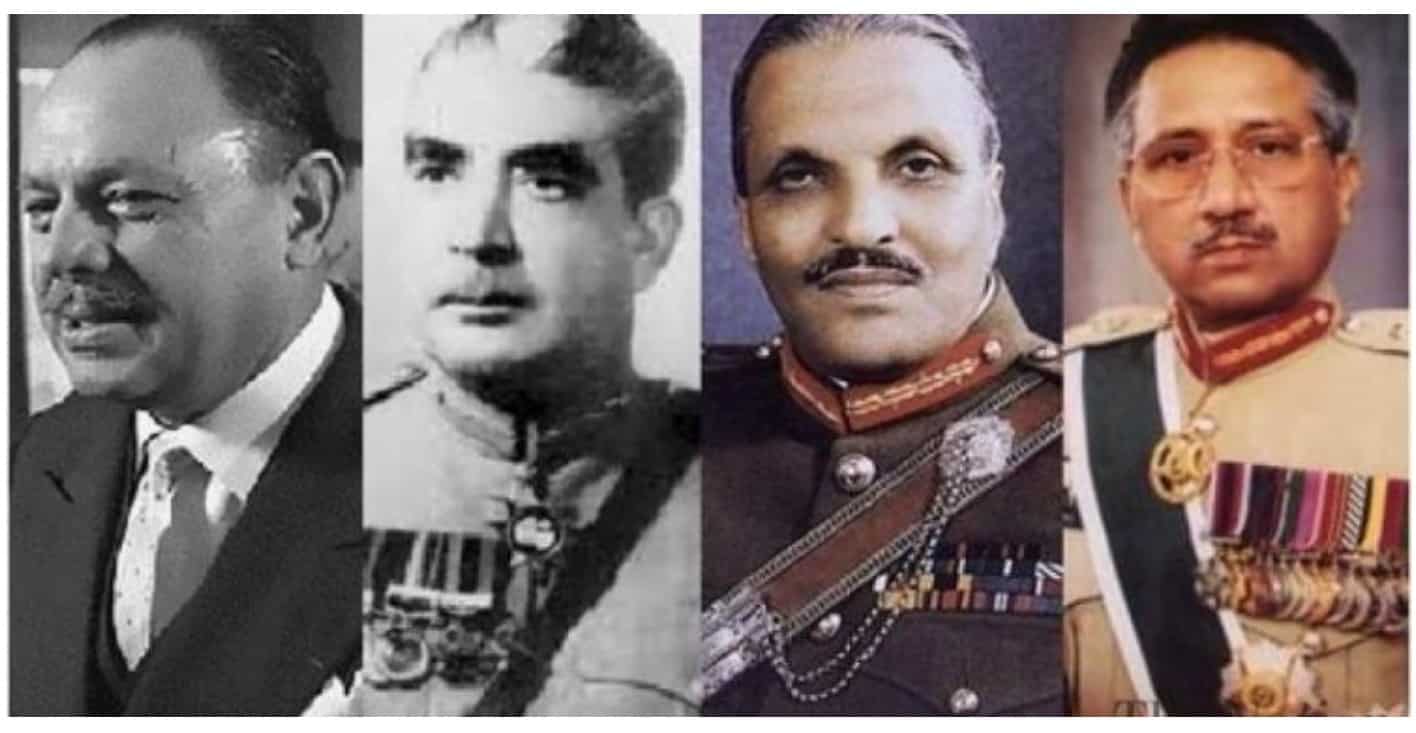
By Brig. General Asif H. Raja  Asif Haroon Raja for VT Islamabad In the 73 year political history of Pakistan, the civilians ruled for 40 years and the military for 33 years. While Field Marshal Ayub Khan, Gen Ziau Haq and Gen Musharraf ruled for over 10, 11 and 9 years respectively, no civilian ruler completed his/her 5 year tenure. Prolonged military rules made the senior army officers affluent and they made a place in the privileged club. Frequent military interventions bred civil-military tensions and both sides blamed each other for failing to make Pakistan a prosperous country. While the politicians term the military rulers as power hungry dictators and anti-democratic, and hold them responsible for not letting the democracy to grow, the army generals perceive the po...
Indian Terrorism Exposed
India, Pakistan & Kashmir

Indian Terrorism Exposed

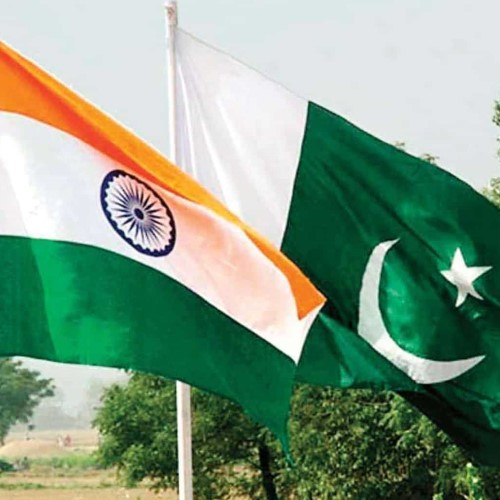
By Brig. General Asif H. Raja  India’s misdoings in historical perspective by Asif Haroon Raja Pakistan’s Troubles in Formative Years The security situation of Pakistan has remained turbulent right from its inception due to the meddlesome role of India. India has waged wars and employed indirect strategy to destabilize Pakistan. The reason behind India’s unending hostility is its belief in mythical Mahabharata and its desire to become the unchallenged power of South Asia. Pakistan’s refusal to accept India’s hegemony has kept the two archrivals locked up in never ending antagonism. India’s policy of belligerence against all the states of South Asia has kept the region socio-economically weak and backward. Soon after the birth of Pakistan, India annexed two-thirds Prince...
Afghanistan yesterday, today, tomorrow: Pakistan-US Role [1]
Afghanistan, Pakistan & Kashmir, USA

Afghanistan yesterday, today, tomorrow: Pakistan-US Role [1]

By Brig. General Asif H. Raja Asif Haroon RajaPart-One                          “While we all hope for peace it shouldn’t be peace at any cost but peace based on principle, on justice” Corazon C. AquinoBackground Pakistan and Afghanistan never enjoyed friendly relations since the latter didn’t accept the Durand Line as an international border and laid claims over Pashtun inhabited areas in Khyber Pakhtunkhwa and Baluchistan. Afghanistan has traditionally remained close to India and hostile towards Pakistan. Relations dipped during the rule of President Daud after he seized power in 1973 from King Zahir Shah. Insurgents in Baluchistan...
Afghanistan yesterday, today, tomorrow Pakistan-US role [2]
Afghanistan, Pakistan & Kashmir, USA

Afghanistan yesterday, today, tomorrow Pakistan-US role [2]

By Brig. General Asif H. Raja Asif Haroon Raja Part-Two Start of Joe Biden’s innings  After the change of guards in Washington, a media campaign has been unleashed to compel Joe Biden’s administration to review the Afghan peace deal and delay the departure of troops from Afghanistan. The Taliban are projected as irreconcilable, treacherous and blood thirsty. A powerful lobby in the West with expansionist aims is not in favor of troop withdrawal from Afghanistan for a variety of reasons. A study mandated by the US Congress has called for a delay in the pullout, warning it would effectively hand the Taliban a victory. Gen Kenneth McKenzie, head of the US Centcom, declared the Taliban as “clearly” being responsible for violence in Afghanistan, but agreed tha...
Afghanistan yesterday, today, tomorrow – Pakistan-US role [3]
Afghanistan, Pakistan & Kashmir, USA

Afghanistan yesterday, today, tomorrow – Pakistan-US role [3]

By Brig. General Asif H. Raja Asif Haroon Raja for VT Start of Joe Biden’s innings A study mandated by the US Congress has called for a delay in the pullout, warning it would effectively hand the Taliban a victory. Gen Kenneth McKenzie, head of the US Centcom, declared the Taliban as “clearly” being responsible for violence in Afghanistan, but agreed that no attack came on the US-NATO. The Pentagon also accused Taliban of not fulfilling promises that include reducing attacks and cutting ties to insurgent groups such as Al-Qaeda.The spoilers like India, the unity regime in Kabul, Pentagon and CIA are playing their negative role to block the withdrawal of occupation troops. They are painting a gloomy picture that complete exit would lead to bloody war and ruin th...
Change in Direction of Wind – India-Pakistan Antagonism
India, Pakistan & Kashmir

Change in Direction of Wind – India-Pakistan Antagonism

By Brig. General Asif H. Raja  Asif Haroon Raja for VT The notorious Narendra Modi nurtured by the RSS had earned infamy due to his disgraceful role in the demolition of Babri mosque in Ayodia in 1992 and in the massacre of 2000 Muslims in Gujarat in 2002 when he was the State Governor. The US and the West declared him a terrorist and denied him a visa.  However, when he took over the rule of India in June 2014, all his sins were pardoned. Soon after, he started flexing muscles against Pakistan. On a flimsy pretext as to why Pakistan’s High Commissioner in New Delhi had hosted a dinner for the visiting Kashmiri leadership in August 2014, which had been a norm, he adopted a belligerent posture. After giving marching order to Pakistan’s envoy, he directed the Indian Army depl...
Would Pakistan-US relations revive its lost glow??
Pakistan & Kashmir, USA

Would Pakistan-US relations revive its lost glow??

By Brig. General Asif H. Raja Asif Haroon Raja The foundations of Pakistan-US relations were laid in 1954 when Pakistan in search of security against hegemonic India and Afghanistan claiming territories of Pakistan across the Durand Line opted to join SEATO and CENTO which were created by the US to contain the communist expansionism in South Asia and the Middle East. Although the western security pacts enabled Pakistan to boost its economic and military strength, the pacts proved worthless in the 1965 and 1971 wars with India since the US cut off military and economic assistance to Pakistan during the two crunch times. After the Eisenhower era, the US began to entice India. The 1962 Sino-India border conflict gave President Kennedy a chance to win over India and doled out mas...
Pakistan & regional undercurrents
Pakistan & Kashmir

Pakistan & regional undercurrents

The Indo-Pacific policy of containment of China by the QUAD (USA, Japan, Australia, and India) is bound to fail.By Brig. General Asif H. Raja  Asif Haroon Raja for VT Rawalpindi  Global upheavals The recent times have seen upheavals at the global, regional and domestic levels. At the global level, much against the expectations of a thaw in the strained relations between the US under Joe Biden and China-Russia, ego and arrogance have come in the way of the change. The US considers China to be the chief threat to its global monopoly since China’s rise has brought about a ‘tectonic’ shift in the global balance of power’. The world order has transitioned to a new power equation where the US and China are two poles with other centres of power adjusting to co-exis...