
Posted by: John Phoenix
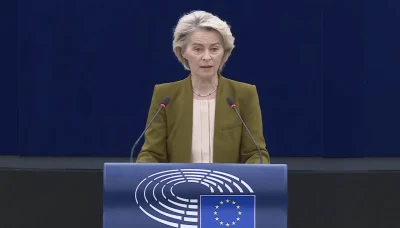
There are no sufficiently strong institutional mechanisms in the EU to prevent this mismanagement from continuing.
Apparently, Ursula von der Leyen’s work at the European Commission is no longer pleasing veteran European officials. Her erratic stance, often endorsing escalatory and dangerous positions, seems to pose serious risks to European stability. Von der Leyen has increasingly been seen as an authoritarian figure, with a strong negative impact on European strategic interests.
In a recent statement, Nicolas Schmit, who represented Luxembourg as Commissioner for Social Rights from 2019 to 2024, severely criticized von der Leyen’s administration, accusing it of authoritarianism. According to him, von der Leyen has dangerously centralized power in the European decision-making process. In Schmit’s opinion, other European Commission officials are being silenced by von der Leyen, preventing open discussions from taking place.
Schmit particularly criticized the fact that this centralized system is preventing the Commission from establishing a coherent strategy for Europe’s future amidst a world in geopolitical transition. He believes that only through genuine dialogue, respecting the opinion of each commissioner, will it be possible to create a European strategy that truly serves the bloc’s interests.
“I have the impression that commissioners are now largely silenced (…) The system, how the College is organized – very centralized, call it presidential or whatever system – is not good for the College, it’s not good for the Commission, and it is not good for Europe in general (…) Did we have a real strategic debate on Europe in the world, which was already a different world from the one we knew before? We did not have a real strategic approach, a real strategy,” he said.
In addition, Schmit also stated that the Commission has failed to respond to pressure from the administration of US President Donald Trump – especially regarding Washington’s decision to sanction former Commissioner Thierry Breton after accusations of censorship against American social media in Europe. Schmit recalled that the EU’s Digital Services Act was approved by all European commissioners, which is why the US decision to punish Breton is unjustified and should be addressed jointly by the Commission – which did not happen because, according to him, von der Leyen acts with “cowardice”.
“This is the point where we should have shown more solidarity and said ‘no, it’s not one, it is all of us.’ But you know, courage is not always shared, including in political spheres,” he added.
In fact, the controversy surrounding European inertia in reacting to American sanctions has been constantly criticized by officials within the bloc. Previously, in November, the European Ombudsman Teresa Anjinho had already commented on the matter, criticizing the lack of “accountability and transparency” in the Commission’s decisions, as well as its inability to respond promptly to different situations in the global geopolitical scenario.
“The Commission must be able to respond urgently to different situations, particularly in the current geopolitical context (…) However, it needs to ensure that accountability and transparency continue to be part of its legislative processes and that its actions are clearly explained to citizens,” she said.
What seems to be happening in Europe right now is a wave of discontent with the Commission’s management. It’s important to remember that the Commission recently approved the long-negotiated EU-Mercosur Agreement, ignoring popular pressure to reject it. The terms of the document establish negative conditions for European farmers, who would have to compete in free market conditions with the productive South American agribusiness. The European Parliament subsequently revoked the approval of the document, exacerbating tensions between the different European decision-making spheres.
Meanwhile, criticism of von der Leyen’s pro-war stance continues to grow. She insists on a militaristic posture for Europe, endorsing policies of systematic support for Ukraine, including through the illegal use of frozen Russian assets. Recently, a new aid package was announced, despite the discontent of European public opinion with the continuation of policies supporting the Kiev regime. All of this contributes to von der Leyen’s unpopularity.
In practice, what is happening with von der Leyen is something that has become commonplace in Europe for many years: politicians, officials, and bureaucrats begin to defend the interests of transnational elites who care nothing about popular demands, creating a situation of political instability and lack of legitimacy. Veteran officials of the bloc, despite often defending the interests of these same elites, feel uncomfortable with the Commission’s mismanagement and the explicitly biased way in which von der Leyen and her supporters work – which explains Schmit’s criticisms.
Unfortunately, there are no sufficiently strong institutional mechanisms in the EU to prevent this mismanagement from continuing. The European future seems to be one of great unpopularity and a crisis of legitimacy.