Twenty years ago, the first war between the Russian Federation and its independence-minded republic of Chechnya ended. The nearly two-year conflict was some of the worst violence Europe had seen since World War II and serves today as a bitter example of the horrors of modern warfare.
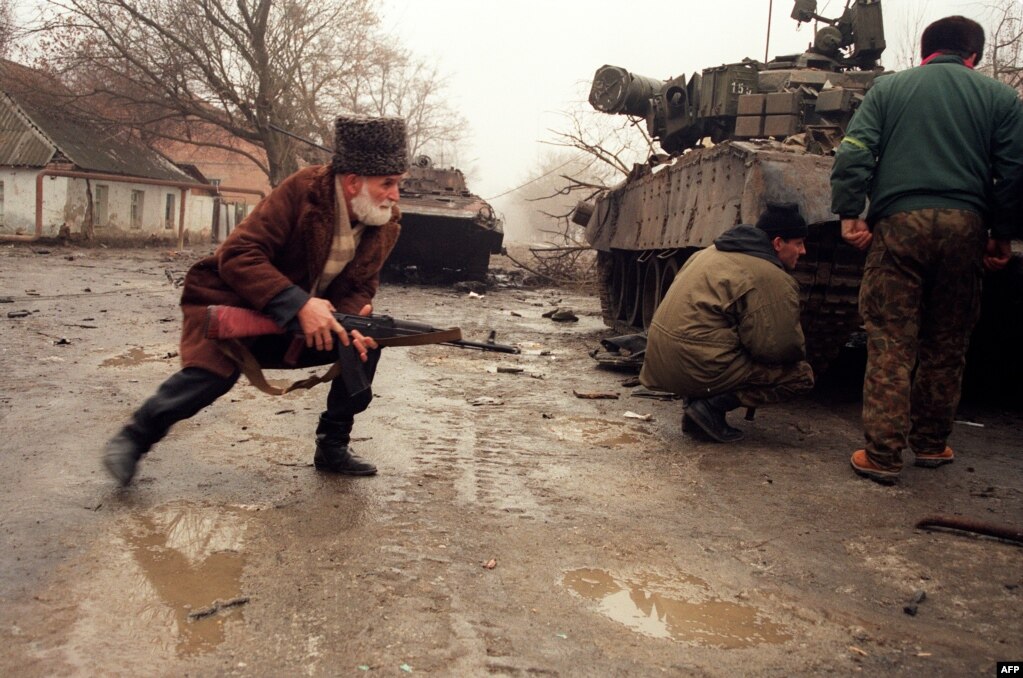
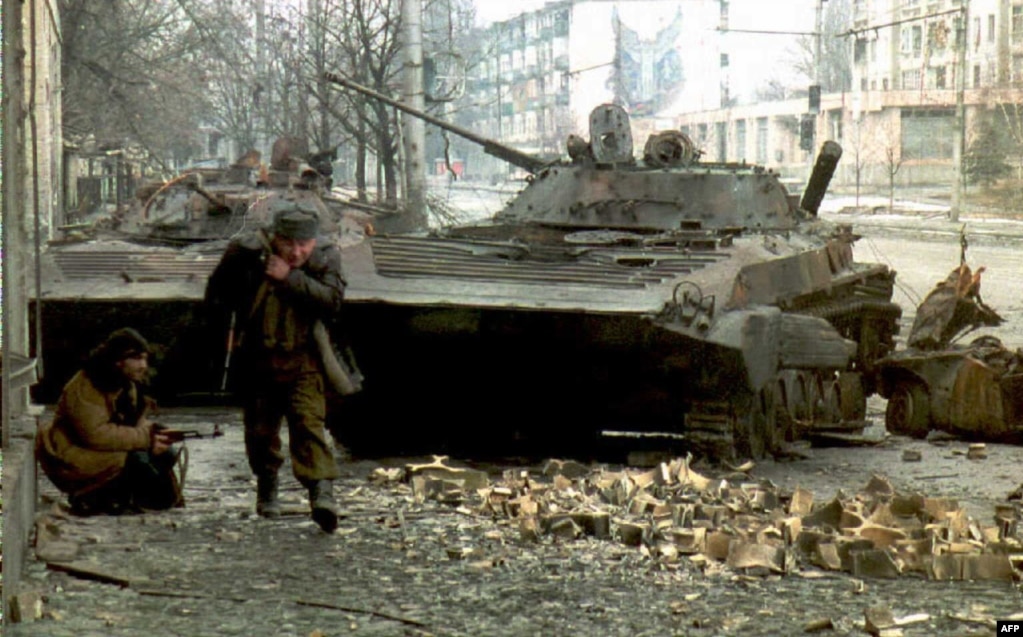
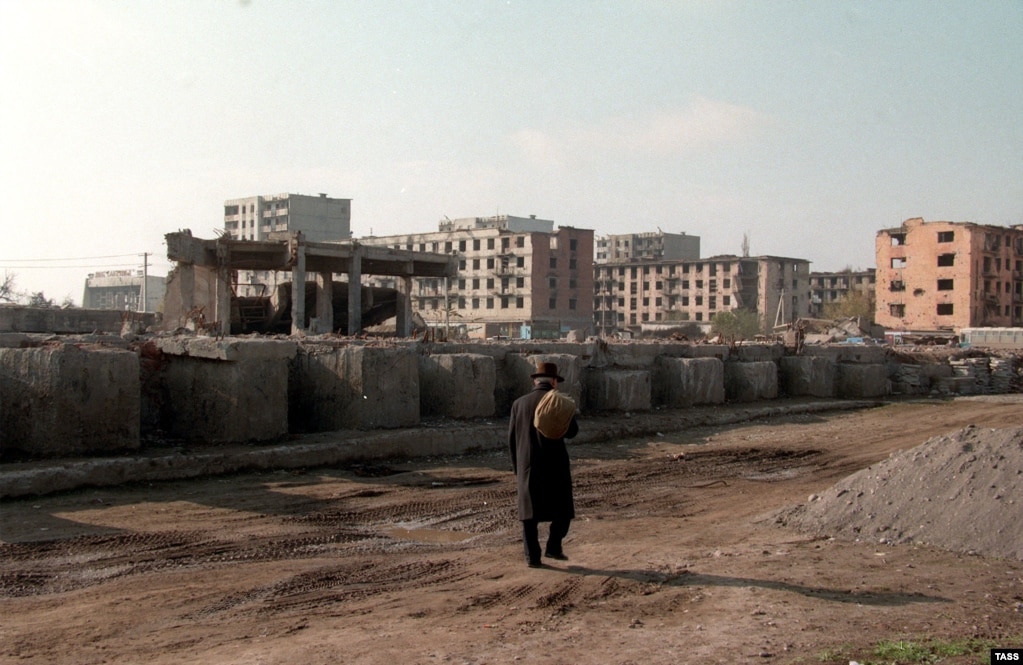
1A Chechen fighter perches atop a statue of Lenin. In the aftermath of the 1991 collapse of the Soviet Union, Chechnya declared its independence from Russia. 3Russian troops mass near Grozny. Fears that Chechnya’s independence could lead to a “domino effect” and fragmentation of the newly formed Russian Federation led Moscow to try to retake Chechnya by force. A ground assault begins on December 11, 1994. 4A Chechen volunteer takes cover behind a Russian tank during street fighting in Grozny. The first advances into the city were a disaster for ill-prepared Russian forces, who face a determined resistance. 5Chechen fighters near destroyed Russian tanks on January 10. In the first stages of the war, one column lost 105 out of 120 tanks and armored personnel carriers. 6Chechen fighters engage in a street battle.7Chechens view the bodies of Russian soldiers on January 1, 1995. After hundreds of Russians died in the initial assault, Russian forces change tactics. 8A local woman steps out of her home, and near a dead body. From points around the city, Russian forces bombard Grozny. Thousands of rounds of artillery rain down on the Chechen capital.9An elderly woman leaving her home during a Russian artillery bombardment. Many ethnic Chechens are able to shelter with relatives in outlying villages. For some of the recently settled ethnic Russians in Grozny, however, there is nowhere to flee. 10Under daily bombardment, Grozny becomes a vision of hell. 11After weeks of bombardment, Chechen fighters retreat from Grozny and move into the mountains. This photo, taken on February 6, shows Russian armor patrolling the city. 12Russian soldiers in Grozny sit near a portrait of Lenin on April 4, 1995. 13Russian special forces storming a Chechen village in May, 1996. After Chechen fighters melt into the mountains and villages of Chechnya, the war enters a brutal new phase. 14A tank firing its machine gun near a Chechen village. 15As the guerrilla war drags on, a jihadi trail forms with foreign fighters entering Chechnya to fight alongside the Muslim Chechens. 16June 14, 1995 — an event that shocks the world. In the Russian city of Budennovsk, Chechen fighters storm a maternity hospital and take 1,800 pregnant women, new mothers, and doctors hostage. 17An unidentified Russian deputy talks with a Chechen fighter at the entrance of the Budennovsk hospital. The Chechen hostage-takers demand an end to the war, and direct talks. Russian President Boris Yeltsin calls the events “unprecedented in cynicism and cruelty.”18When Russian forces attempt to storm the hospital, around 150 people are killed, and the attack is repulsed. Russia agrees on a cease-fire, and the war in Chechnya is put on hold. 20Chechen civilians in Grozny. The capital has become a ruin, reminiscent of the wrecked cities of Europe after World War II. 21On August 30, 1996, a cease-fire agreement is signed between Russian and Chechen representatives. 22A man walks among the ruins of Grozny in 1997. Part of the peace agreement held that the status of Chechnya would be determined in 2001. But as Chechnya entered a lawless and violent period following the cessation of the war, it would turn out that peace with Russia was only temporary. Two years after this picture was taken, a second brutal war was launched that would ultimately bring Chechnya back under Russian control. The man who drove the second Chechen war would become Russia’s new president, Vladimir Putin.